
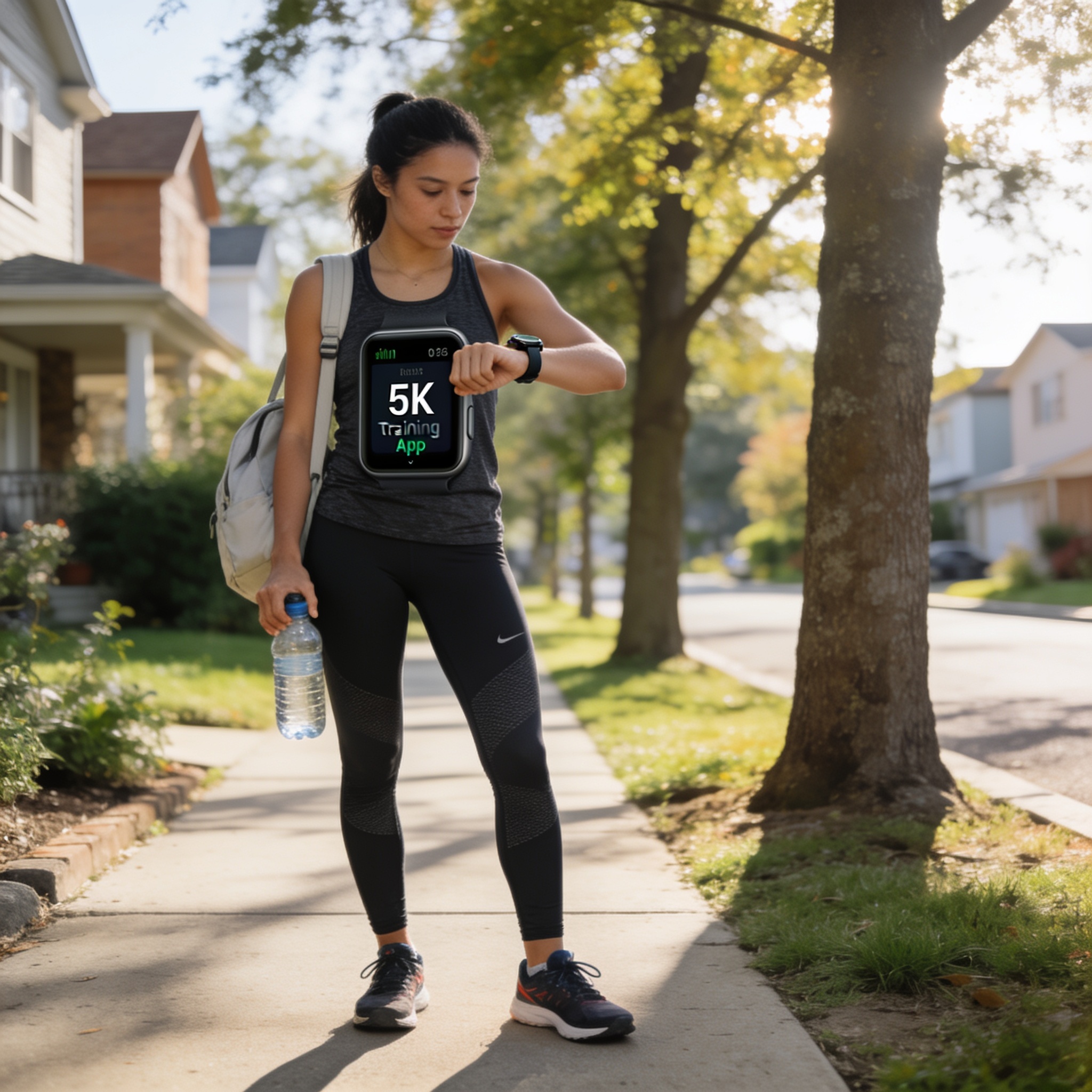
How to Start Running When You've Only Done Home Workouts
You've gotten comfortable with burpees in the living room, mastered the push-up on the bedroom floor, and can plank through an entire song without cursing. Home workouts have given you a base - cardio, strength, maybe a little flexibility - but now you're wondering if it's time to take the training outside. Running feels like the logical next step, except for one small problem: you have no idea how to start.
The jump from controlled, living-room circuits to real, outdoor running can feel surprisingly steep. You know how to follow a video cue, but out on the street there's no instructor counting down the intervals. The terrain changes, the wind picks up, your legs feel heavy in a way they never did during jump squats. And the biggest question - how hard am I supposed to be pushing right now? - goes unanswered.
If you've spent months building fitness at home, you already have the discipline and the base cardio capacity. What you need now is a way to translate that into running without the guesswork, the anxiety, or the urge to push too hard on day one and quit by day three.
The home workout brain doesn't love unstructured cardio
Home workout people are planners. You press play, someone tells you what to do, you do it, the video ends. Thirty minutes, done. There's a rhythm to it, a predictability that makes it easy to show up.
Running doesn't work like that by default. You open the door, start moving, and immediately face a dozen micro-decisions. How fast? How far? When do I walk? How do I know if I'm going too hard or not hard enough? The lack of structure is disorienting, especially if you're used to someone calling out 'ten seconds left, give me everything' while you grit through mountain climbers.
That's why a lot of home workout converts try running once or twice, feel lost or defeated, and quietly go back to the living room. The missing piece isn't fitness - it's a framework.
Pacing is the thing nobody tells you about
The single biggest mistake home workout people make when they start running: going out too fast. You're used to working hard. You've done HIIT circuits that leave you breathless in four minutes. So when you start a run, your instinct is to match that intensity - push hard, earn it, make it count.
But running isn't a four-minute burn. It's sustained effort over distance, and if you go out at your home-workout intensity, you'll be walking and gasping by minute three. Then you'll assume you're terrible at running, when really you just started at a pace that would make experienced runners uncomfortable.
The fix is counterintuitive: start slower than feels right. Like, much slower. If you've never run before, your first few runs should feel almost embarrassingly easy. You're not building speed yet - you're teaching your body to handle the repetitive impact, the steady rhythm, the difference between treadmill bouncing and pavement pounding.
This is where the walk-run interval method becomes essential. You don't go out and try to run the whole time. You run for a short burst - sixty seconds, say - then walk to recover. Then run again. The walking isn't failure; it's part of the plan. It's how you build endurance without wrecking yourself.
If you've done interval circuits at home, the concept will feel familiar. The difference is that out on the road, you need a way to know when to switch. No video timer in the corner of the screen. No instructor yelling 'transition!'
Audio coaching is the closest thing to a YouTube workout for running
The reason home workout videos work so well is that they remove decision fatigue. You don't have to count reps, remember what comes next, or wonder if you've done enough. The instructor tells you. You follow.
That same structure exists for running - you just need an app that delivers it the same way. Audio coaching turns a run into a guided workout. A voice in your ear tells you when to start running, when to walk, when you're halfway through, when you've got thirty seconds left. You're never checking your phone, never guessing, never wondering if you miscounted.
5k Trainer is built exactly this way - it gives you a structured, 9-week couch-to-5K program with audio coaching that mirrors the experience of following a video. You press start, and the app guides you through the warmup, the intervals, the cooldown. Countdown warnings before every transition mean you're never caught off guard. It's the same principle as a home workout, just ported to the outdoors.
You can keep your phone in your pocket the entire time. The voice does the work.
The terrain thing is real, but it gets easier
Home workouts happen on flat, predictable surfaces. Running outside introduces curbs, cracks, hills, gravel, puddles, and the occasional rogue dog. If you're used to moving in a controlled rectangle, the chaos of real terrain can feel unnerving at first.
Here's what helps: pick a route you know. Walk it once before you run it, so the turns and the surface changes aren't surprises. Stick to sidewalks or park paths for the first few weeks - nothing technical, nothing hilly unless you want the challenge.
Your body will adapt faster than you expect. The stabilizer muscles in your ankles and hips that never had to do much during a living-room lunge will wake up and start doing their job. The uneven ground that felt wobbly on run one will feel normal by run five.
And if a hill appears mid-interval? Walk it. Seriously. Walking uphill isn't quitting - it's smart pacing. Experienced runners walk hills all the time. You're not trying to impress anyone; you're trying to finish the workout and come back for the next one.
You already know how to show up - that's half the work
If you've stuck with home workouts for months, you've already proven you can build a habit. You know how to carve out thirty minutes, how to ignore the voice that says 'skip today,' how to feel tired and do it anyway.
That discipline transfers directly. The only difference is you're lacing up shoes instead of clearing floor space. The same mental tools apply: put it on the calendar, do it at the same time, treat it like an appointment you can't cancel.
Running three times a week for nine weeks is not a huge time ask. You've probably done longer home workout programs. The structure is nearly identical - progressive overload, planned rest days, gradual increases in intensity.
The other advantage you bring from home workouts: you already understand recovery. You know what it feels like to be sore and still move. You know that progress happens between sessions, not just during them. That mindset matters more in running than people realize, especially in the early weeks when your legs feel heavy and slow.
The offset benefit: running clears space in a way home workouts don't
This part is harder to quantify, but it's real. Home workouts keep you inside, in the same four walls, often in the same mental loop you've been in all day. Running gets you outside, into weather, past strangers, through neighborhoods or trails that aren't your living room.
There's a psychological shift that happens when you move through space. The workout stops being something you check off a list and starts being a break from the list entirely. No screen, no notifications, no one asking you a question between sets.
If you've been doing home workouts because they're convenient and require no commute, you're not wrong - they are. But running requires even less setup. Shoes, door, go. No equipment, no video buffering, no deciding which instructor you're in the mood for today.
It's the most low-friction cardio that exists. Once you know what to do, it's just you and the road.
The program matters more than the gear
You don't need running-specific shoes on day one. You don't need moisture-wicking shirts or a hydration vest or a GPS watch. You need a plan that tells you when to run and when to walk, and a way to follow that plan without thinking.
The gear can come later, if you want it. What matters in the first few weeks is that you're running often enough to build the habit, but not so hard that you're sore and resentful by Thursday.
Three runs a week is the rhythm that works. More than that and you're inviting overuse injuries before your tendons are ready. Fewer than that and you lose momentum between sessions.
A structured program - whether it's a coach, a printout, or an app with audio cues - keeps you from doing too much or too little. It makes the decision for you. That's the same reason home workout videos work: you don't have to design the session, you just have to show it up for it.
You've already done the hard part
If you've been doing home workouts consistently, you've already crossed the biggest barrier to running: you've built the habit of moving. The transition from living room to outdoors isn't a restart - it's an extension.
You know how to follow a plan. You know how to push through discomfort. You know how to show up tired and still finish. Those skills don't disappear the moment you step onto a sidewalk.
What you need now is the same thing you needed when you started home workouts: someone to tell you what to do, in what order, and for how long. The only difference is that the person is now a voice in your ear instead of a face on a screen.
Once you have that structure, the rest is just repetition. Three runs this week, three next week, three the week after. By week nine, you'll be running thirty minutes straight - something that probably sounds impossible right now, but won't by the time you get there.
You've already proven you can build something from nothing in a living room. The road is just a bigger room with better scenery.
This article is general information, not medical advice. Talk to a doctor before starting a new exercise or nutrition program, especially if you have a health condition, are pregnant, or are returning from injury. Stop and get checked if you feel chest pain, dizziness, or sharp pain.